

As a serious new organization, WPLN News reliably brings you vital information to help you understand current events and make decisions. But every once in a while, as a little treat, we also take a look at some of the more silly, surprising and scandalous chapters in Tennessee history. And sometimes even serious news stories have elements that might make you do a double take.
In this installment of The Backstory, we’re rounding up oddities from around the state. You’ll find stories ranging from literal monkey business to a full-blown hoax. Each of them comes from the backlog of the NashVillager Podcast, where host Nina Cardona uses historical context to orient us in the present day. If you’re just tuning in, you can find previous installments about turning points in our state’s history, Tennessee’s influence on the nation, and early leaders behaving badly.
This project is funded under an agreement with the State of Tennessee administered by the Tennessee Commission for the United States Semiquincentennial.
1.When Tennesseans paid taxes in squirrels (and crows and wolves)

Back when Tennessee was just starting out as a state, the counties could collect their due not just in coin but in scalps. As Cardona explains in this episode, certain animals, including squirrels and crows, were considered nuisances. They were known to destroy crops for early settlers, and so early Tennesseans were required to hunt them to pay their taxes. They could be charged a penny for each squirrel they fell short. And crows were each worth two squirrels. Wolves were worth a whole $2 in 1797 money. In the end they were all incinerated.
Cardona recounts some of the major way Tennessee’s tax codes have changed over its 230 year history, bringing us into the present day as lawmakers consider reducing — or eliminating — the grocery tax.
2. The real motivation for the Scopes Monkey Trial
 Courtesy Tennessee State Library & Archives
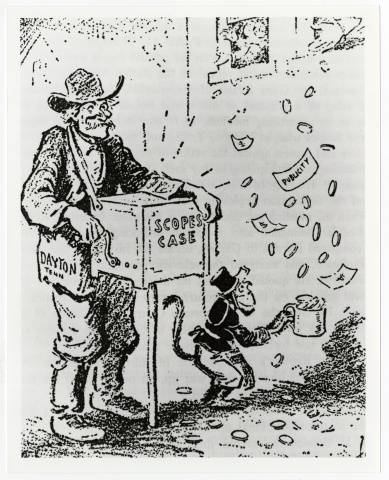
 A political cartoon illustrates how the town of Dayton cashed in on all the publicity that came with the high profile Scopes trial.
Would it surprise you to know that one of the most high profile court cases of the early 20th century wasn’t a coincidence? In fact, the origins of the Scopes Monkey Trial had as much to do with bringing publicity and tourism to the small town of Dayton as with the actual arguments. See, the state had just passed a law banning public schools from teaching about evolution. The ACLU had agreed to pay the legal fees for any teacher willing to be accused of breaking the law. As Cardona explains in the episode, the leaders of Dayton knew that a trial on the issue would brings a lot of attention — and people — to town.
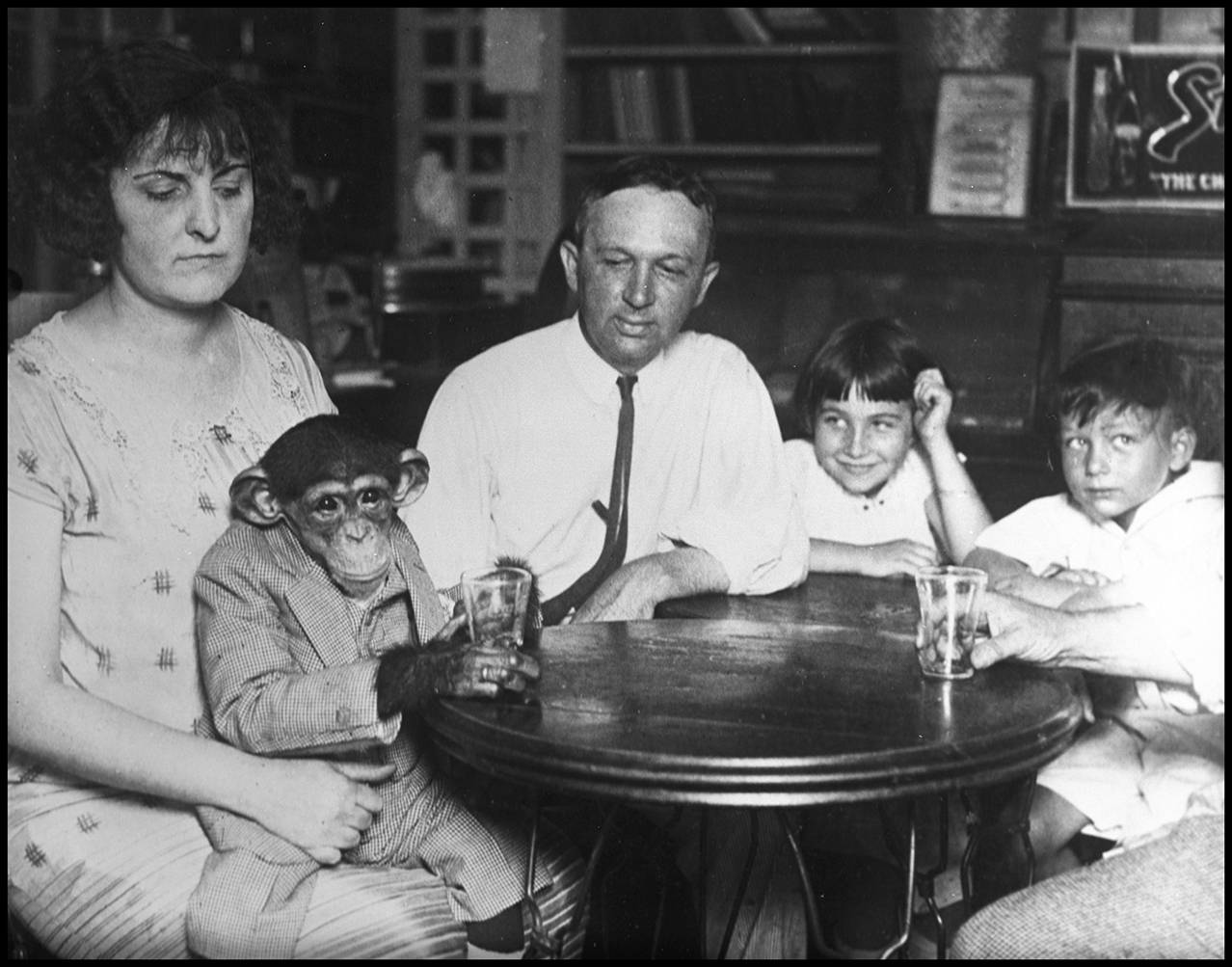
As two of the era’s most well-known attorneys held a multi-day debate over religion and science in school curriculum, Dayton turned into a circus. Blocks of primate-themed booths filled the streets. Somebody brought a trained chimpanzee named Joe Mendi as entertainment. And the whole trial was broadcast on the radio for people around the country. Some of the testimony was so memorable and compelling that it’s still quoted every year in a play that Dayton puts on each July.
 Courtesy Tennessee State Library & Archives
 A family poses for a photo with Joe Mendi, a show business chimpanzee who was brought to Dayton for the Scopes Monkey Trial.
3. How a pet monkey became the face of an illegal pharmacy kickback scheme
 Courtesy United States Attorney’s Office, Middle District of Tennessee
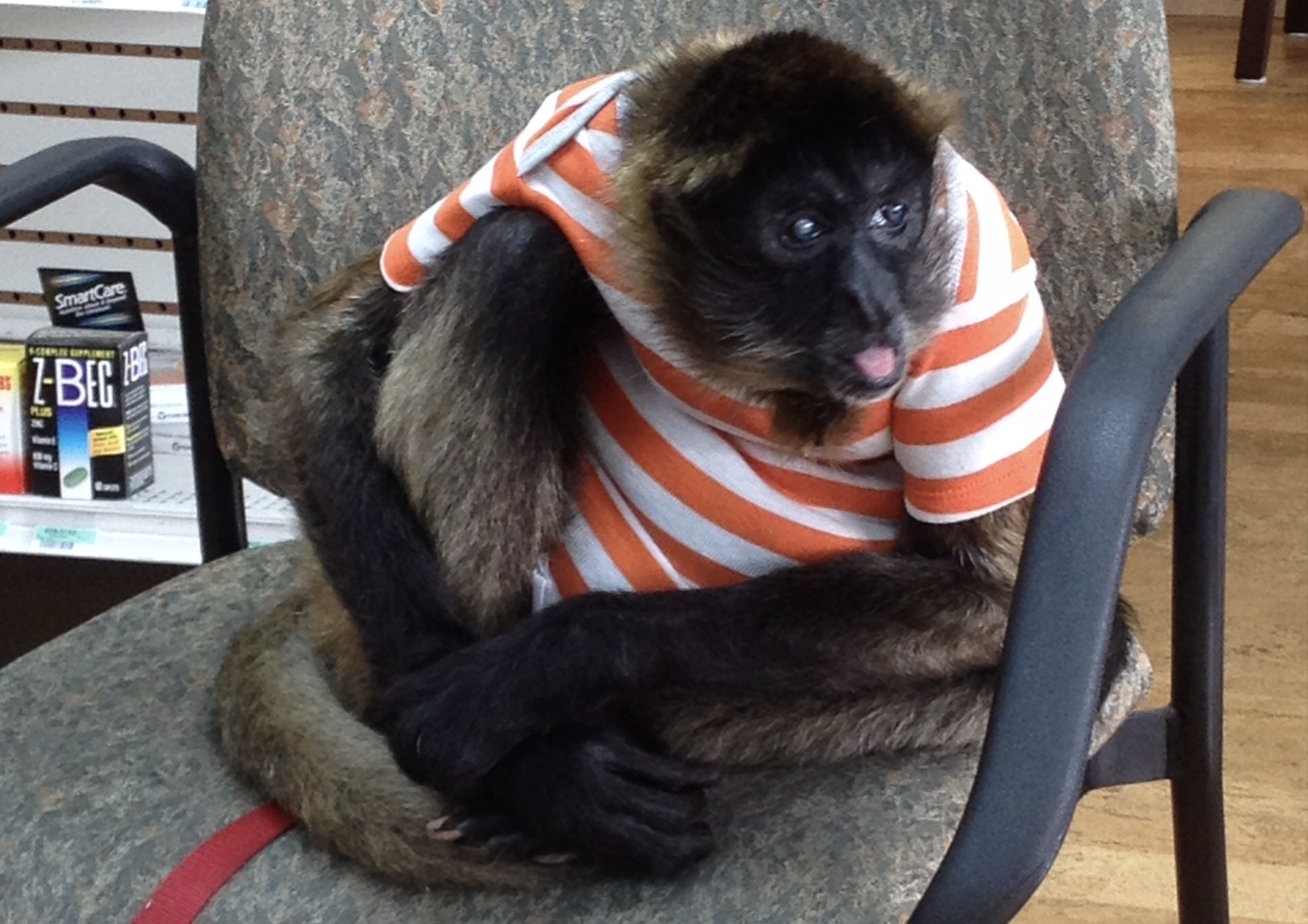
 Carlos was the face of so-called “monkey bucks” which were used to incentivize drug sales at a Celina pharmacy.
Our next primate-focused tale is more recent. It takes place in the 2010s in the small town of Celina, where pharmacies dispensed opioids at some of the highest rates in the country. One pharmacist, William Donaldson, who was known for bringing his pet monkey Carlos to work, admitted to selling hydrocodone without a prescription.
Donaldson served time for the offense, but afterward, he returned to working at his old store, under new ownership. Then, they rolled out a new promotion to boost sales: monopoly-like money with Carlos’ face printed on it. According to the U.S. Attorney’s Office for the Middle District of Tennessee, both Donaldson and new owner, Thomas Weir “engaged in a kickback scheme that included paying patient co-payments, distributing a fictitious currency known as ‘Monkey Bucks’ that could be redeemed for cash, and paying patients cash to fill prescriptions that were subsequently billed to Medicare and TennCare.”
Both Donaldson and Weir pleaded guilty. And since this episode was released, they’ve each been sentenced to 24 months in prison.
4. The Bat Creek Stone hoax
 Public domain
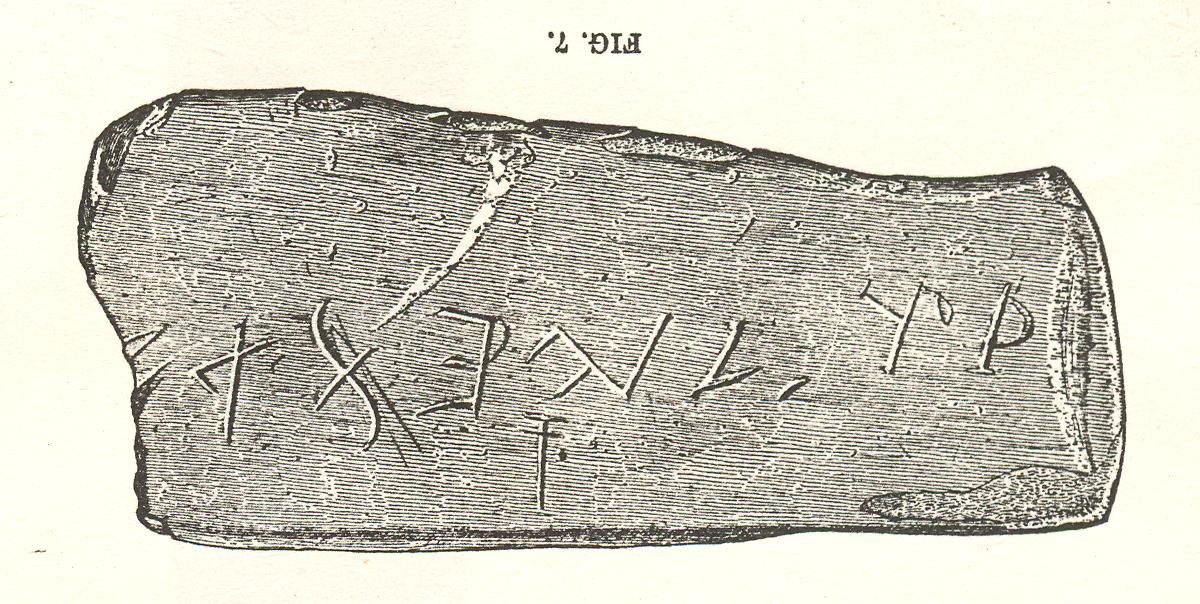
 A drawing of the Bat Creek Stone shows the unique carvings.
In 1889, a Smithsonian expedition was looking for artifacts from Native American burial mounds around the country. One dig in East Tennessee yielded a particularly interesting stone tablet. A field assistant said he found it under a skull, etched with markings that appeared to be some kind of language. Testing has confirmed that the Bat Creek Stone was likely placed there rougly 1,500 years ago. Early theories posited that it was a Cherokee writing system. However, as Cardona notes in the episode, a Cherokee man named Sequoyah is known for developing that system in the 1820s, centuries after the mounds had been formed.
A later theory suggested that, when flipped upside down, the writing looked similar to ancient Hebrew. Then a couple of decades later, somebody noticed that the text was strangely similar to an image published in a book for Freemasons about 15 years before that fateful dig. That prompted a closer look at the man who found the stone in the first place. It turns out he had been demoted due to lack of professionalism earlier in his archaeological career. Many now conclude that after discovering the stone, the field assistant made the carvings himself, setting off a more-than-century-long hoax.
5. Nashville’s homegrown drug-smuggling king
 Credit: The Tennessean obtained via Newspapers.com
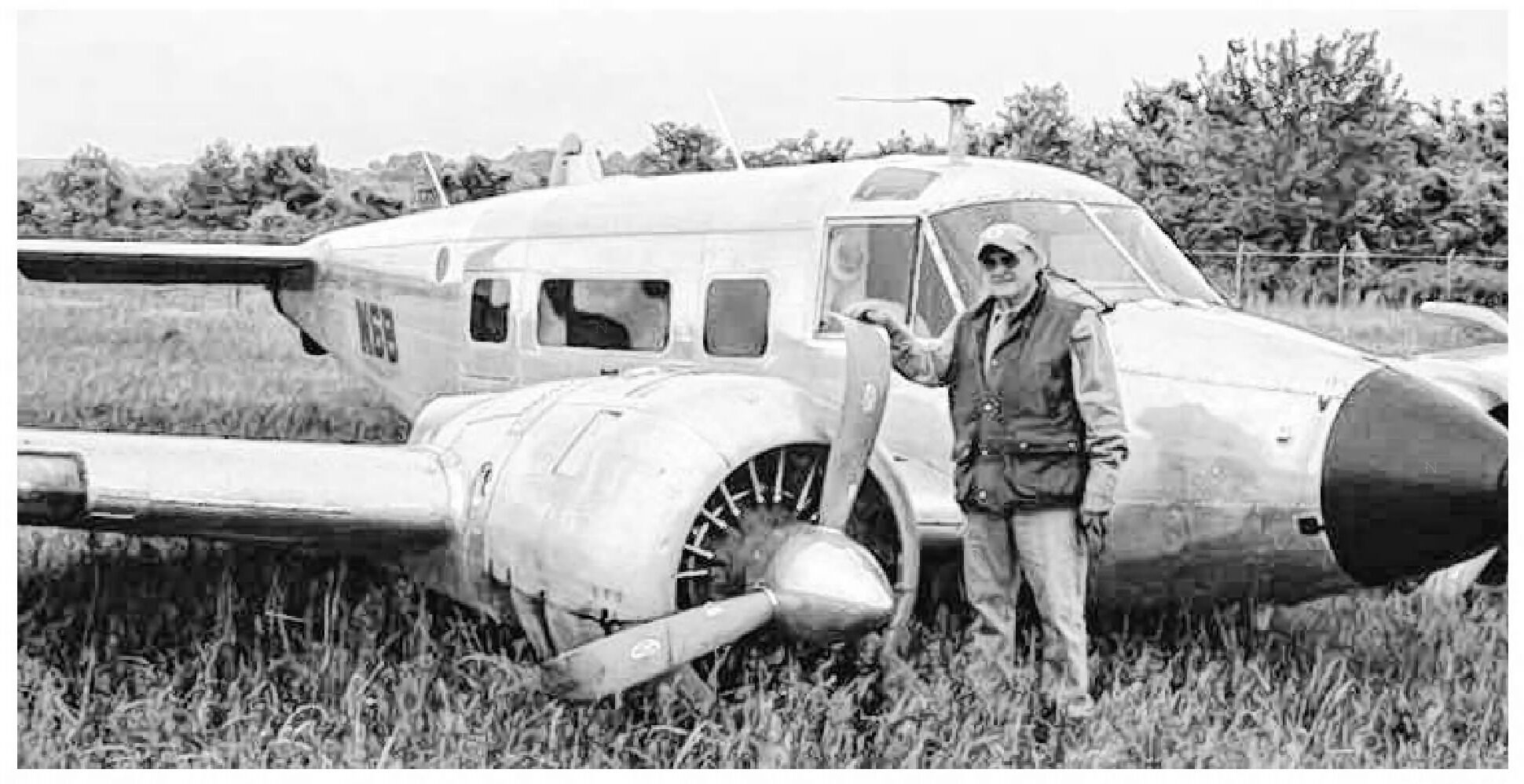
 Russell Brother poses with the plane he emergency landed in Cornelia Fort Airpark in April 2012.
Our final tale lands us in East Nashville at Cornelia Fort Airpark. Cardona paints the scene vividly in this episode, when a mysterious airplane crash-landed in the grass one night in 2012. However, the pilot did it so skillfully that he walked away unharmed. But he left behind the plane. That confused the Metro parks employee who found it the next morning. Especially since Cornelia Fort Airpark hadn’t really functioned as an airport since it flooded badly in 2010. A day later, the park worker called in law enforcement who started working to identify who the plane belonged to.
But by the time they figured it out, a Tennessean reporter named Tony Gonzalez (who is now WPLN’s News Director) had already tracked down and interviewed the man. It was none other than Russell Brothers, a Nashville native who had attended Montgomery Bell Academy and Vanderbilt University. He then went on to become an international drug smuggler.
Back in 1988, he was convicted of sneaking 1.5 tons of cocaine into the country. Prosecutors said he helped run drugs from South America all the way up to Canada. He served 11 years in prison, and then stayed mostly under the radar for a decade.
But less than a week after that 2012 crash landing, police searched his home and found 16 firearms. Due to his previous felony conviction, Brothers possessing even one of those guns was illegal. In 2014, when he was 77 years old, Brothers pleaded guilty and agreed to serve 15 months in prison.
He reportedly tried to donate the aircraft to the city to display in the park. It seems Metro wasn’t interested in keeping a memento.
 On Air - 90.3 WPLN-FM